September 2025
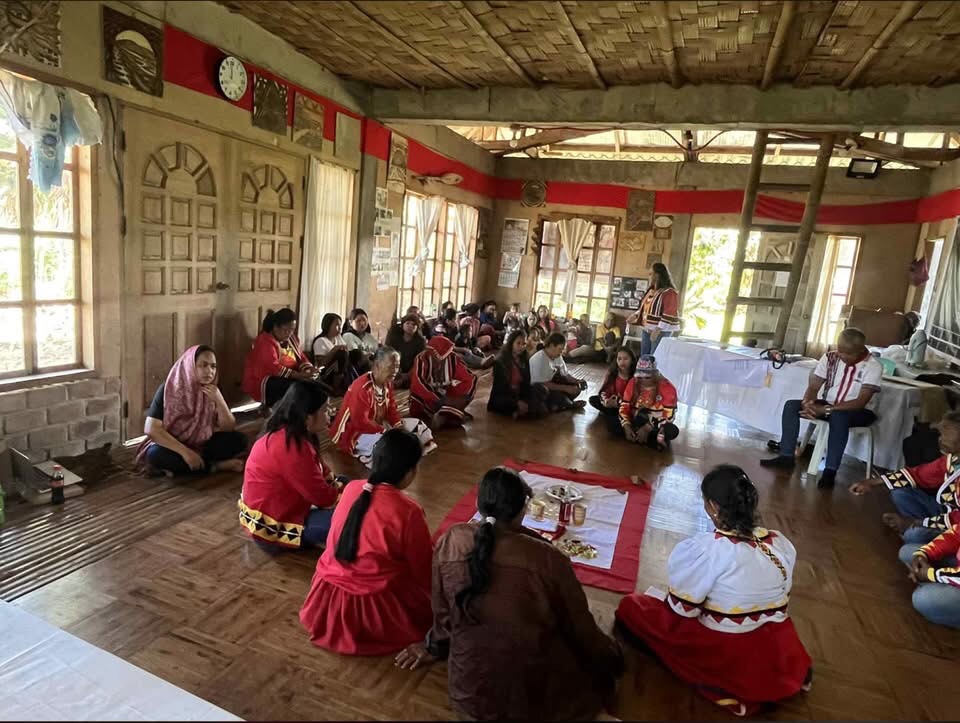
Contrary to what non-indigenous people believe, our tribe has put an end to the practices of polygyny and child marriage. We also encourage other indigenous peoples’ groups that have not yet stopped these practices to do the same,” declared Bae Inatlawan (Enlightened One), Adelina Docenos Tarino, Chieftain of the Daraghuyan Ancestral Domain, Bukidnon Tribe.
With the intent of transforming indigenous laws from within, Bae Inatlawan gathered leaders of the Bukidnon and Higaonon tribes in Daraghuyan Ancestral Domain for a series of dialogues on marriage-related concerns and problems experienced by indigenous women.
Personal experience
Bae Rose, from Misamis Oriental, shared the hardships and hurtful experiences she went through because of polygyny. “There were times that I wanted to end my life because of the deep hurt I went through,” Bae Rose began. “I tried drinking muriatic acid and ‘gas’ to escape my situation, but the elders saved me by giving me local herbs.”
Although polygyny is less practiced these days, it has taken on another form, infidelity. For the indigenous women leaders, polygyny, like infidelity, is a form of Violence Against Women (VAW).
Child marriage
Another marriage concern is early marriage, more commonly known as child marriage, which is prohibited under Philippine law, Republic Act 11596. This practice causes many problems for families and communities. Before, parents used to think that marrying off their children early was good—an assurance that their children would have a better life with a roof over their heads and food to eat. The leaders observed that early marriage is not helpful because girls and boys will never have the chance to finish even high school, and so will have limited opportunities for self-growth and economic development.
“We respect our indigenous laws and follow them with all our hearts, but that does not mean we cannot change or cannot let go of laws and norms that we clearly see as hurtful to women and even our children,” explained young Bae Mahaglaw (Clarity), Sherline Catahum.
Modern times have brought social media to indigenous communities, and the group warned of the ease with which one might sin against one’s family and community laws. Young indigenous peoples have the responsibility to follow the indigenous values of not having sexual relations outside of marriage, so they will not be forced to marry each other.
Solemnizing Officers
However, in Daraghuyan, Bae Inatlawan clarified that solemnizing officers do not solemnize the marriage of those under 18 years of age or who are being forced into marriage. “We solemnize at the right age of marriage, following Philippine national law, and do not solemnize when even just one of them is being forced into the marriage,” Bae Inatlawan said.
“Duway” and early marriage were practiced by our ancestors since pre-colonial times, but that does not mean we have to conform to these practices today, Bae Inatlawan added.
As indigenous people, we are not static; we are dynamic and can always make our laws more humane and friendly to women. For us, polygyny and early or child marriage practices fall under the category of Violence Against Women (VAW), Bae Inatlawan stressed.
“The practices spiral women and their families into deeper poverty and a sad existence,” Bae Rose added.
Male support
Supporting the women, Datu Impoog urged non-indigenous people not to see indigenous people as backward. “Our culture comes from a long lineage of ancestors, and we have our own laws that can adjust to modern times. I sincerely hope that non-indigenous people can also see us as equally progressive and intelligent,” said Datu Impoog, whose name means “source of strength.”
“Sesem”
The term “sesem” refers to grave sins such as incest. Fathers or uncles who sexually violate their daughters, and cousins who engage in sexual relations, commit the grave sin of “sesem.” The traditional punishment is death on a stake using the hardest indigenous wood called “manibela.”
However, discussions are still ongoing in many indigenous communities about enforcing the marriage of underage people caught having sexual relationships, as such relationships are considered bad luck. Preventing these relationships by teaching traditional values of respect among young people is the priority right now, the group said. Sometimes, the law is also confusing concerning how it can be integrated into indigenous communities without causing confusion within their own indigenous laws and conflict among community members.
Indigenous “hilot”
On a related note, the leaders expressed concerns about the policy prohibiting the practice of traditional birth attendants, or “hilot.” According to them, the distant health centers are challenging to reach, with expensive transportation fares. Government policy should find a way to recognize the sacredness of the role of the “hilot.”
“Sometimes, government laws make life more difficult for indigenous people because we have been prohibited from practicing our own traditional ways, which we know are safe and save us from many unnecessary expenses associated with modern Western medicine,” Bae Rose lamented.
Waiting in long lines at the hospital and being at the mercy of doctors and nurses who do not understand indigenous health practices is disempowering. Penalizing traditional birth attendants and healers for practicing their sacred roles, passed down through a long lineage of ancestors, is oppressive.
Carol R. Bello / Dawonlay
 Lalang Hu Mga Laga -Stories of Women